




























































E26 vs. E27 Bulbs: Key Differences & How to Choose the Right One

E26 vs. E27 Bulbs: Key Differences & How to Choose the Right One
Size, voltage, compatibility and safety — everything you need before buying your next bulb
The difference between E26 and E27 bulbs is the base diameter: 26 mm vs 27 mm. E26 is the standard in 120V countries like the USA and Canada, while E27 is the standard in 220–240V regions including India, Europe and Australia. The bases usually fit each other, but the bulb's voltage rating must match your home's supply — in India, choose E27 bulbs rated 220–240V.
The E26 and E27 bulb bases are standard screw-in types used for light bulbs in homes, offices and commercial spaces around the world. They look almost identical, yet choosing the wrong one — or more importantly, the wrong voltage — can mean a bulb that flickers, burns out early or becomes unsafe.
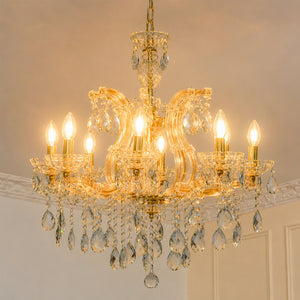
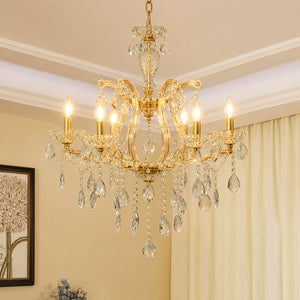
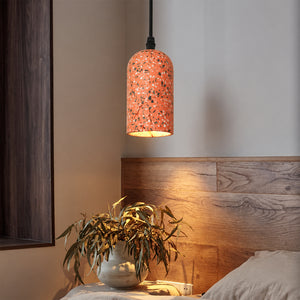
So what exactly separates an E26 from an E27, and how do you know which one your fixture needs? This guide explains the numbers on a bulb base, compares E26 and E27 side by side, covers the bulb bases used in Indian homes (including E14 and B22), and walks you through choosing and installing the right bulb for your Whispering Homes pendants, chandeliers and lamps.
Living in India? Look for an E27 or B22 bulb rated 220–240V for most ceiling lights and lamps, and an E14 bulb for most chandeliers and sconces. Always confirm on the fixture label first.
What Do E26 and E27 Mean?
Both E26 and E27 belong to the Edison screw family — the most widely used light bulb socket in the world, named after Thomas Edison. In every Edison screw code, the "E" stands for Edison and the number is the diameter of the bulb's screw base in millimetres.
E26 Bulb
"E" for Edison screw and "26" for a 26 mm base diameter. E26 is the standard medium base in North America and is also used in Japan. It is built to the American ANSI standard for 120V (and 100V in Japan) supplies.
E27 Bulb
"E" for Edison screw and "27" for a 27 mm base diameter. E27 is the standard in India, Europe, Australia and much of Asia and Africa. It is built to the international IEC standard for 220–240V supplies.
Although the difference in size is only 1 mm, the two bases were designed for different electrical systems. That is why the base code alone does not tell the whole story — the voltage printed on the bulb matters just as much.
What Are the Key Differences Between E26 and E27 Bulbs?
While E26 and E27 bulbs look identical, their specifications follow different regional standards and electrical requirements.
| Feature | E26 Bulb | E27 Bulb |
|---|---|---|
| Base diameter | 26 mm | 27 mm |
| Standard | ANSI (American) | IEC (International) |
| Main regions | USA, Canada, Mexico, Japan | India, Europe, UK, Australia, most of Asia |
| Typical supply voltage | 110–120V (100V in Japan) | 220–240V (230V in India) |
| Thread | About 7 threads per inch | Almost identical pitch — about 7 threads per inch |
| Physical fit | Usually screws into E27 sockets | Usually screws into E26 sockets, can feel slightly tight |
| Brightness | Depends on lumens, not base | Depends on lumens, not base |
| Common uses | Ceiling lights, lamps, pendants in 120V homes | Ceiling lights, lamps, pendants in 230V homes |
Mechanical Fit
Because the diameters differ by only 1 mm and the threads are nearly the same, most E26 bulbs screw into E27 sockets and vice versa. If a bulb feels tight or loose, stop — never force it.
Electrical Safety
The real risk is voltage mismatch. A bulb made only for 120V can blow instantly or overheat on a 230V supply, while a 230V bulb on 120V will be dim or may not light at all.

The One Rule to Remember
Always buy bulbs rated for your regional voltage, even if the base fits. Using a 120V E26 bulb in a 230V E27 socket can cause it to fail immediately and may pose a fire risk.
- In India: look for "220–240V" or "100–240V" on the bulb or box
- Imported bulbs: US-market bulbs are often 120V only — check before buying online
- Universal LEDs: many LED bulbs are rated 100–240V and work in both regions
- Smart bulbs: confirm both voltage and that the app and Wi-Fi band work in India
What Are the Advantages of E26 and E27 Bulbs?

Advantages of E26 Bulbs
- The most common base in North America and Japan
- A huge range of smart bulb options
- Compatible with almost all standard US fixtures
- Robust construction for reliable electrical contact

Advantages of E27 Bulbs
- The global standard for 220–240V regions, including India
- Made for higher-voltage supplies with suitable insulation
- Widely used in architectural and decorative lighting
- Available in a vast variety of shapes, finishes and styles
Which Bulb Bases Are Used in India?
Indian homes run on a 230V, 50Hz supply and mainly use three bulb bases: the E27 screw base, the B22 bayonet base and the smaller E14 screw base. Knowing all three helps you buy the right bulb the first time.
| Base | Type & Size | Where You'll Find It |
|---|---|---|
| E27 | Edison screw, 27 mm | Pendants, ceiling lights, floor and table lamps |
| B22 | Bayonet (push and twist), 22 mm | Older batten holders and many standard Indian fittings |
| E14 | Small Edison screw, 14 mm | Chandeliers, candle bulbs, sconces, small lamps |
| E26 | Edison screw, 26 mm | Imported US fixtures and bulbs |
| E12 | Candelabra screw, 12 mm | Imported US chandeliers — not the same as E14 |
| GU10 | Twist-lock pins | Spotlights and track lights |
E27 vs B22
E27 screws in clockwise; B22 has two side pins that push in and twist to lock. They are not interchangeable without an adapter. E27 is more common in modern decorative fixtures, while B22 is still common in standard household holders.
E27 vs E14
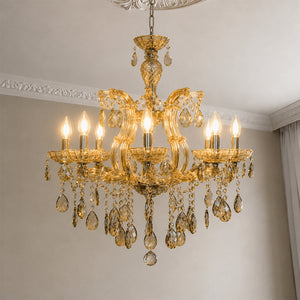
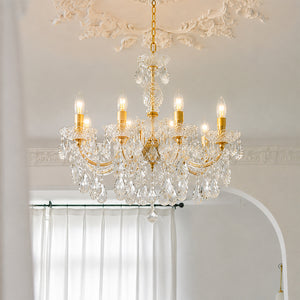
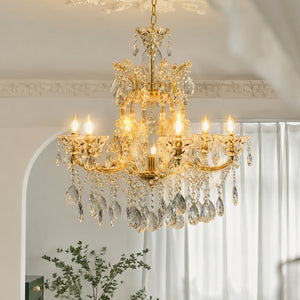
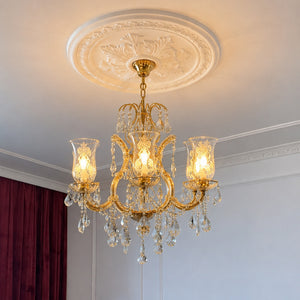
E14 is roughly half the size of E27 and is used where a slim, candle-style or small bulb looks better — chandeliers, sconces and bedside lamps. An E27 bulb will not fit an E14 holder.
Imported American chandeliers often use E12 candelabra bases, which are smaller than the E14 bulbs sold in India. Check the base code carefully before buying replacement candle bulbs.
How Do You Know Which Bulb Base Your Fixture Needs?
A 1 mm difference is almost impossible to see by eye, so use these simple checks instead of guessing.
Read the Label
Most lamp holders and fixtures list the base type and maximum wattage on a sticker or inside the holder.
Check the Old Bulb
The base code — E27, E14, B22 — and voltage are usually printed on the bulb's metal base or glass.
Screw or Pins?
Threads mean an Edison (E) base. Two small pins on the side mean a bayonet (B22) base.
Check the Product Page
For decorative lights, the product details usually state the bulb base, bulb count and recommended wattage.
Measure if Unsure
Measure across the outside of the bulb's threads: about 26–27 mm is E26/E27, about 14 mm is E14, about 12 mm is E12.
Ask the Seller
If the fixture is imported, confirm both the base and the voltage the holder is rated for.
How to Choose the Right Bulb for Your Needs
The base gets the bulb into the socket, but brightness, colour and shape decide how your room actually feels. Work through these points in order.
- Check your socket Confirm the base code from the label, old bulb or product details — E27, E26, E14 or B22.
- Verify the voltage Match the bulb to your supply: 220–240V in India and Europe, 110–120V in North America, or a universal 100–240V LED.
- Choose brightness in lumens Around 800 lumens replaces an old 60W bulb, and around 1,100–1,600 lumens suits larger rooms or reading corners.
- Pick a colour temperature 2700K–3000K gives a warm glow for living rooms and bedrooms; 4000K is crisper for kitchens, studies and work areas.
- Match the bulb shape to the fixture Exposed pendants look best with decorative filament or globe bulbs; shaded lamps suit standard bulbs.
- Check wattage and dimming Stay within the fixture's maximum wattage, and choose a dimmable bulb only if you have a compatible dimmer.
Which Bulb Shape Suits Which Fixture?
Vintage Filament
Edison-style ST64 and teardrop bulbs suit industrial and vintage pendants where the bulb is on show.
Globe Bulbs
G80, G95 and G125 globes give a soft, modern glow in open pendants, vanity lights and minimalist fixtures.
Standard A60
The everyday bulb shape — ideal under lampshades, in flush ceiling lights and closed fittings.
Candle Bulbs
Usually E14; used in chandeliers, candle-arm sconces and classic crystal fixtures.
Opal / Frosted
Diffused bulbs reduce glare in glass shades and are kinder on the eyes in bedrooms.
Smart Bulbs
Change colour and brightness from your phone — check voltage and app support before buying.
How to Install an E26 or E27 Bulb Safely
Proper installation keeps your bulb and fixture working safely for longer. Follow these simple steps for a seamless setup.
- Switch off the power Turn off the light switch and, if possible, the circuit breaker before touching any electrical parts.
- Let the old bulb cool Halogen and incandescent bulbs get very hot — wait a few minutes before removing them.
- Check socket compatibility Confirm the fixture needs an E26 or E27 base and that the new bulb's voltage matches your supply.
- Clean the socket Wipe away dust with a dry cloth so it does not interfere with the connection.
- Screw in securely Turn the bulb clockwise until it is snug. Do not over-tighten, as this can damage the threads or contacts.

- Use bulbs within the fixture's maximum wattage
- Choose LED bulbs in enclosed fittings to reduce heat
- Use certified adapters only when you must change base type
- Force a bulb that feels tight or loose
- Use 120V-only bulbs on a 230V supply
- Stack multiple adapters in one socket
"The right bulb doesn't just fit the socket — it completes the light."
Whispering HomesFAQs About E26 vs. E27 Bulbs
What is the main difference between E26 and E27 bulbs?
The main difference is the base diameter: an E26 bulb has a 26 mm screw base and an E27 bulb has a 27 mm screw base. E26 is the standard in 120-volt regions such as the United States and Canada, while E27 is the standard in 220–240-volt regions such as India, Europe and Australia.
Are E26 and E27 bulbs interchangeable?
Physically, E26 and E27 bulbs are usually interchangeable because the 1 mm difference and nearly identical thread let most bulbs screw into either socket. The real limit is voltage: the bulb must be rated for your home's supply, so check that it says 220–240V or 100–240V before using it in India.
Which bulb base is most common in India?
E27 screw bases and B22 bayonet bases are the most common bulb bases in Indian homes. Smaller E14 bases are widely used in chandeliers, wall sconces and decorative lamps.
Can I use an E26 bulb in India?
An E26 bulb will usually fit an Indian E27 socket, but you should only use it if the bulb is rated for 220–240V or has a universal 100–240V rating. A bulb rated only for 120V can fail immediately, overheat or become a fire risk on India's 230V supply.
Can I use an E27 bulb in a fixture designed for E26?
An E27 bulb will generally screw into an E26 socket, but the fit can feel slightly tight, so turn it gently and never force it. Also make sure the bulb's voltage rating matches the local supply, because most E27 bulbs are made for 220–240V.
Does the base size affect how bright a bulb is?
No, the base size does not affect brightness. Brightness is measured in lumens and depends on the bulb type and design, so an E26 and an E27 LED with the same lumen rating will give the same amount of light.
Can I use LED bulbs in E26 and E27 sockets?
Yes, LED bulbs are widely available in both E26 and E27 bases. They use far less energy than incandescent bulbs, run cooler and last many times longer, which makes them the best everyday choice for most fixtures.
What is the difference between E27 and B22?
E27 is a screw-in base that you twist clockwise, while B22 is a bayonet base with two side pins that you push in and turn to lock. Both are 22–27 mm class household bases common in India, but they are not interchangeable without an adapter.
What is the difference between E27 and E14?
E14 is a smaller 14 mm screw base often called a small Edison screw, used in chandeliers, candle bulbs, sconces and small table lamps. E27 is the larger standard base used in ceiling lights, pendants and floor lamps.
Is it safe to use a bulb base adapter?
Bulb base adapters, such as B22 to E27, are generally safe when they are good quality, certified and used with low-heat LED bulbs within the fixture's wattage limit. Avoid stacking adapters, and check that the extra length does not push the bulb out of the lampshade or fitting.
How do I know which bulb base my fixture needs?
Check the label inside the lamp holder or the fixture's product details, or look at the code printed on the old bulb's base, such as E27, E14 or B22. If there are no markings, a screw base means an E-type bulb and a base with two side pins means a bayonet B22 bulb.
What are E26 and E27 bulbs used for?
E26 and E27 bulbs are used for general household lighting in ceiling lights, pendant lights, table lamps, floor lamps and many wall lights. They are also popular in decorative lighting, where exposed vintage filament and globe bulbs are part of the design.
E26 or E27: The Final Word
E26 and E27 bulbs are nearly identical in design, and most will physically fit either socket. What truly separates them is the region they are made for and the voltage they are built to handle — E26 for 120V systems in North America, and E27 for 220–240V systems in India, Europe and much of Asia.
Check your fixture's base, match the voltage to your home, and then choose the lumens, colour and shape that suit the room. Opt for energy-efficient LED bulbs wherever you can — they save power, run cooler and let your lighting look beautiful for years.
Find the Right Light for Every Room
Pendants, chandeliers, wall lights and lamps — designed to glow beautifully with the right bulb.
Continue Your Lighting Journey
More side-by-side guides to help you choose lighting and decor with confidence.
1 comment
звоните круглосуточно по телефону горячей линии клиники: наши специалисты готовы оказать необходимую помощь в решении проблемы алкогольной зависимости.
Получить больше информации – [url=https://vivod-iz-zapoya-sochi24.ru/]вывод из запоя цена в сочи[/url]