












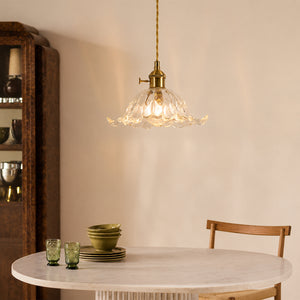
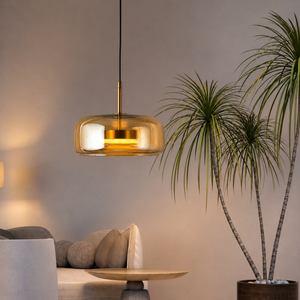
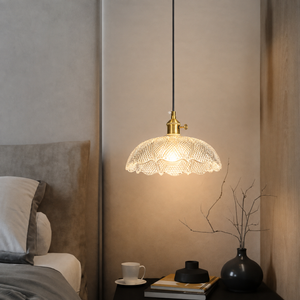
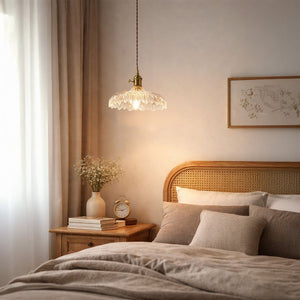








































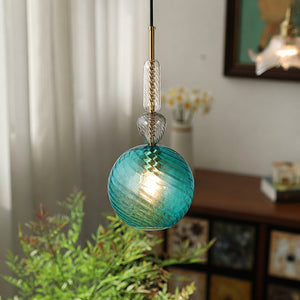
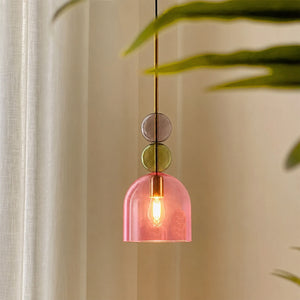



Pendant Lights vs. Chandeliers: Which Is Right for Your Home?
Pendant Light vs Chandelier
Which Is Better for Your Home?

Choosing the right ceiling light can completely change how a room looks and feels. A well-chosen pendant light can make a kitchen island feel stylish and functional, while the right chandelier can turn a dining room or foyer into an impressive focal point. But when comparing a pendant light vs chandelier, appearance is only one part of the decision — room size, ceiling height, furniture layout, and lighting needs all matter just as much.
What Is the Difference?
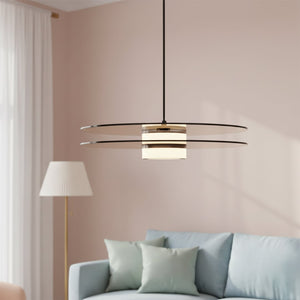
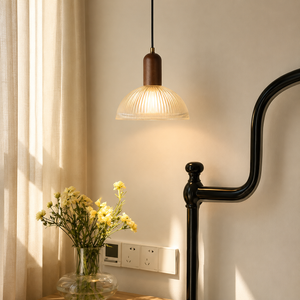
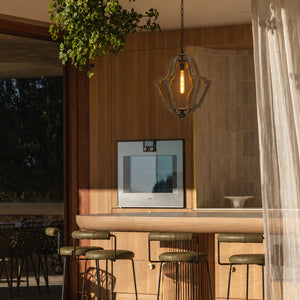
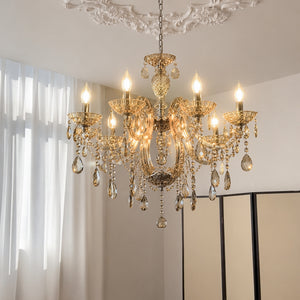
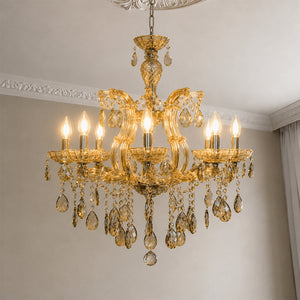
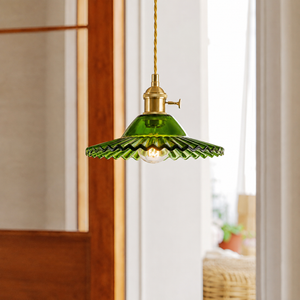
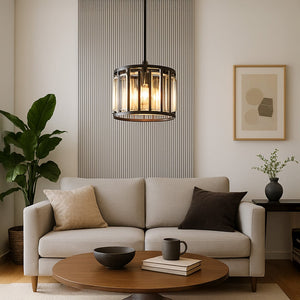
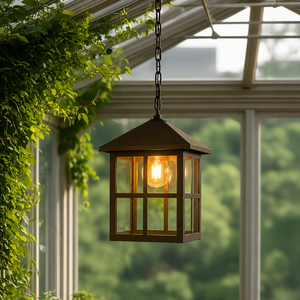
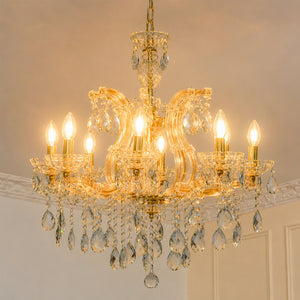
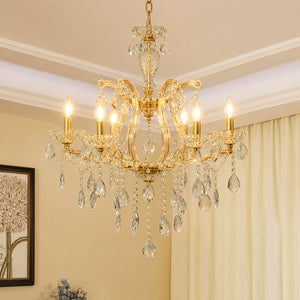
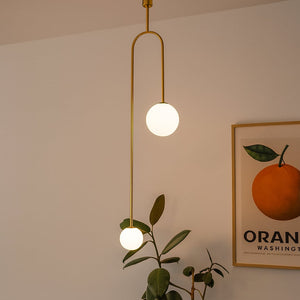
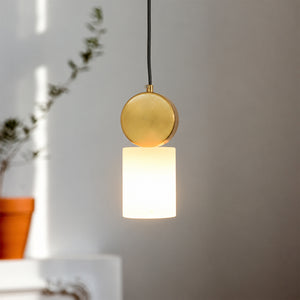
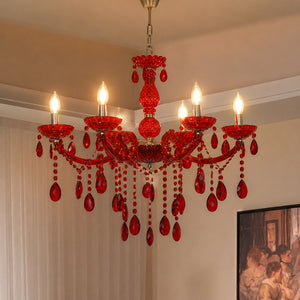
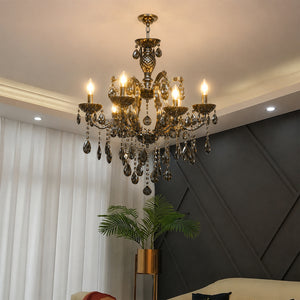
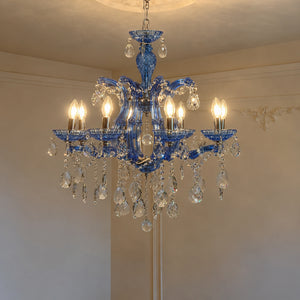
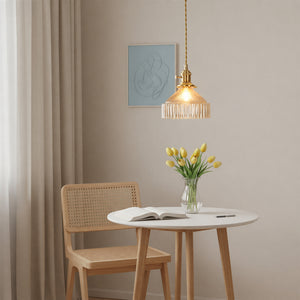
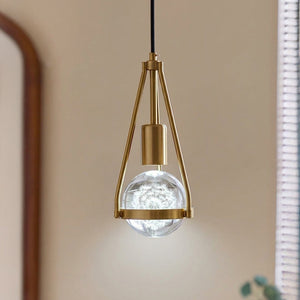
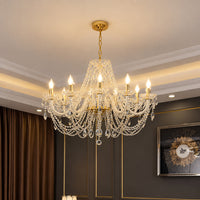
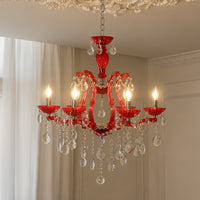
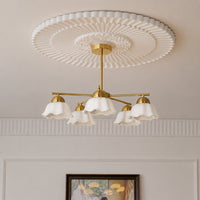
A pendant light is typically a single fixture suspended from the ceiling by a cord, chain, or rod, often used to direct light toward a particular surface. A chandelier is generally a larger decorative fixture with multiple bulbs or branches arranged around a central structure, designed to become a prominent feature while providing ambient light.
The distinction isn't always absolute — large multi-light pendants can resemble chandeliers, and contemporary chandeliers can look minimalist. The more useful question isn't which fixture is technically which; it's simply: what does your room need the light to accomplish?
Pendant Lights: When Are They the Better Choice?
Pendant lighting is particularly useful when you want to illuminate a specific area without visually overwhelming the room.

You Need Focused Lighting
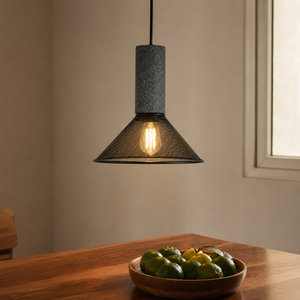
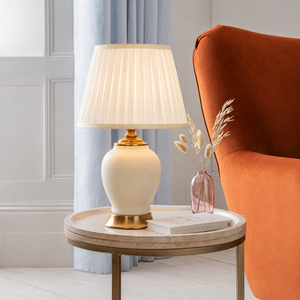
Pendant lights are excellent for task and accent lighting — directing light toward kitchen countertops, islands, dining tables, desks, or reading corners. A pendant above a kitchen island, for example, provides useful illumination exactly where food preparation happens, rather than lighting the whole kitchen evenly and leaving the worktop dim.
- Ideal over kitchen islands, dining tables & desks
- Works well for reading corners & bedside areas
- Puts light exactly where a task happens, not just around it

Your Room Is Small or Medium-Sized
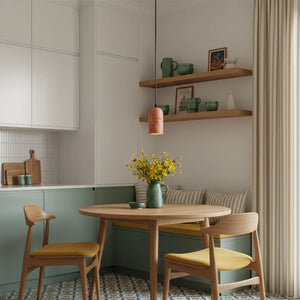
A large chandelier can make a compact room feel crowded, while a well-proportioned pendant is often easier to integrate — particularly suitable for apartments, compact dining areas, bedrooms, home offices, and smaller kitchens. A pendant also keeps the ceiling feeling open, which matters more in rooms that already have limited floor space.
- Fits apartments & compact dining areas comfortably
- Suits bedrooms & home offices with limited ceiling space
- Easier to scale down without visually crowding the room

You Have a Lower Ceiling
A large, deep chandelier can feel visually heavy in a room with limited ceiling height. A streamlined pendant with an appropriate drop provides the decorative effect without making the ceiling feel lower — though a carefully sized low-profile chandelier can still work if its vertical dimensions and clearance are checked first.
- Streamlined drop avoids making the ceiling feel lower
- A safer default when you're unsure of chandelier clearance
- Still allows a decorative element without added visual weight

You Prefer a Modern or Minimalist Look
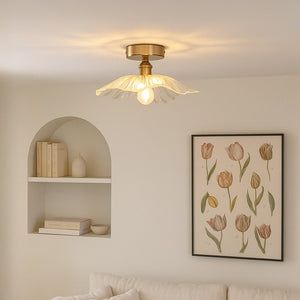
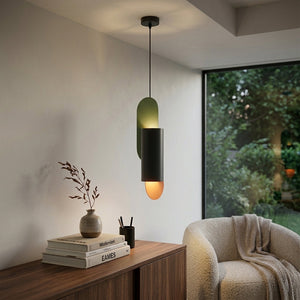
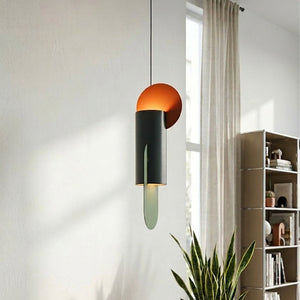
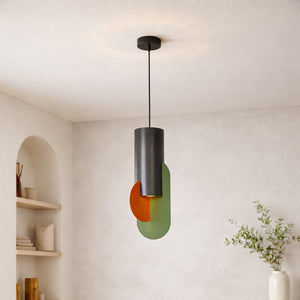
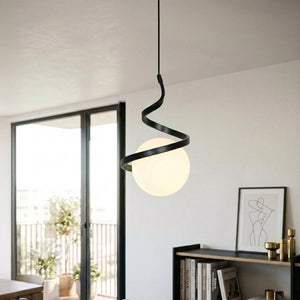
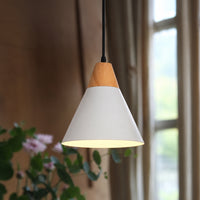
Pendant lights work naturally with contemporary, Scandinavian, industrial, and transitional interiors. A simple glass, metal, ceramic, wood, or fabric pendant adds personality without competing with furniture or architectural details — letting the shape of the fixture do the talking instead of ornate detailing.
- Works in glass, metal, ceramic, wood or fabric
- Adds personality without competing with existing decor
- Suits Scandinavian, industrial & transitional interiors

You Want Flexibility
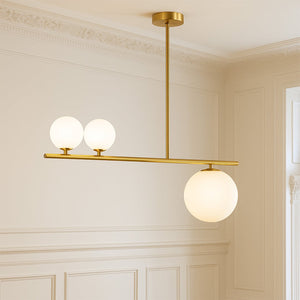
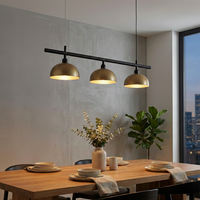
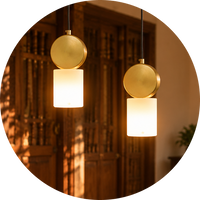
You can install one large pendant, two or three smaller pendants, a linear pendant, or a cluster at different heights. Using multiple pendants can distribute light more evenly over a long island or dining table than a single fixture would.
- One large statement pendant
- A row of two or three matching pendants
- A linear pendant over a rectangular table
- A cluster of pendants at staggered heights
Chandeliers: When Are They the Better Choice?
Chandeliers are often chosen when the fixture needs to do more than illuminate — it needs to establish a visual focal point.

You Want a Statement Piece
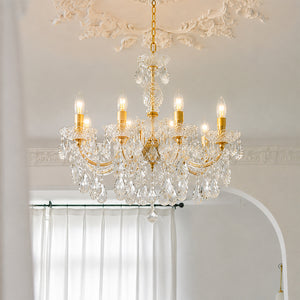
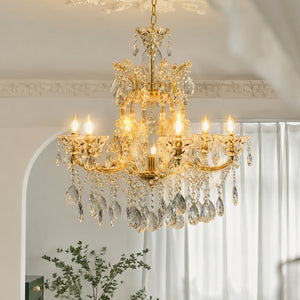
A chandelier can become the centrepiece of a room — particularly effective in dining rooms, foyers, living rooms, and stairwells. Instead of blending into the ceiling, it draws the eye upward and helps define the interior's personality, often becoming the first thing a guest notices when entering the room.
- Anchors dining rooms, foyers & stairwells
- Draws the eye upward, adding architectural presence
- Sets the tone for the rest of the room's design

You Have a Large Room
Large rooms can make small fixtures look insignificant. A substantial chandelier provides the visual weight needed to balance a large dining table, open living area, or spacious entrance — though proportion still matters; bigger isn't automatically better, and an oversized fixture in the wrong shape can look just as out of place as one that's too small.
- Balances a large dining table or open living area
- Fills visual space that a small fixture can't
- Proportion still matters more than sheer size

You Have High Ceilings
High ceilings give chandeliers more vertical space to make an impact, visually connecting the ceiling with the living area below and preventing a large room from feeling empty. For double-height spaces, fixture scale becomes even more important — too small a chandelier can disappear into the height instead of anchoring it.
- Visually connects ceiling height to the living space below
- Prevents a tall room from feeling empty overhead
- Especially valuable in double-height foyers & stairwells

You Want Decorative or Ambient Lighting
Chandeliers often use several light sources, spreading illumination in different directions. This makes them useful when the goal isn't lighting one surface but contributing to the room's overall atmosphere — best paired with layered ambient, task, and accent lighting rather than relied on alone, since even a large chandelier rarely covers every practical lighting need in a room by itself.
- Multiple light sources spread illumination widely
- Contributes to atmosphere rather than one task area
- Works best layered with task & accent lighting, not alone

Your Interior Is Formal or Luxurious
Traditional chandeliers remain popular in classic interiors, but contemporary versions suit modern homes too.
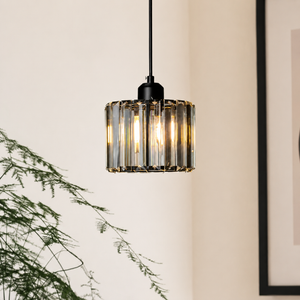
- Crystal & glass for classic formality
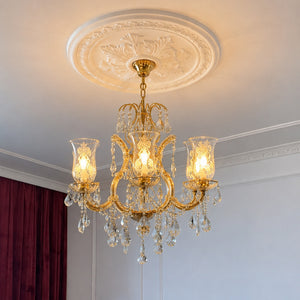
- Brass & matte metal for warmth
- Sculptural, linear & geometric for a modern edge
Quick Comparison
| Feature | Pendant Light | Chandelier |
|---|---|---|
| Typical design | Single or compact suspended fixture | Multi-light decorative fixture |
| Main purpose | Focused / task or accent lighting | Ambient, decorative & statement lighting |
| Best for | Kitchens, islands, desks, smaller dining areas | Dining rooms, foyers, large living spaces |
| Visual impact | Subtle to moderate | Moderate to dramatic |
| Small rooms | Usually easier to scale | Can be overwhelming if oversized |
| High ceilings | Works, especially in groups | Particularly effective |
| Style | Modern, minimalist, industrial, transitional | Traditional, modern, luxury, sculptural |
| Flexibility | Very high | More dependent on room scale |
| Multiple fixtures | Common | Usually one central statement fixture |
| Maintenance | Generally simpler | Can be more involved depending on design |
Which Is Better, Room by Room?
What Type of Lighting Is Best for a Dining Room?
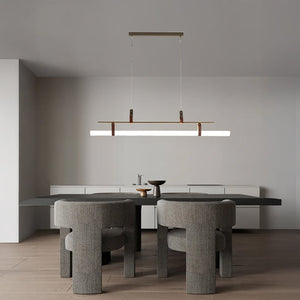
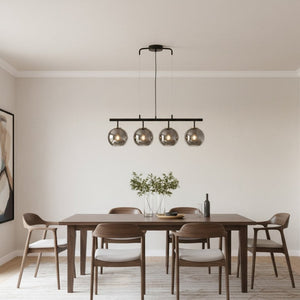
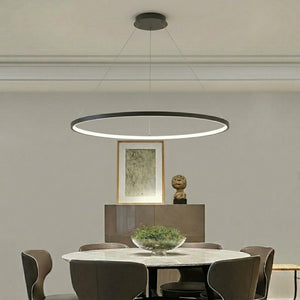
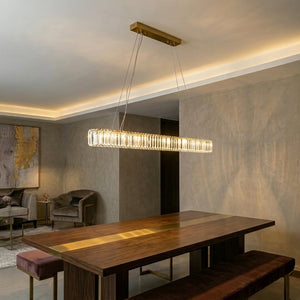
This is one of the most common places homeowners compare a pendant light vs chandelier — both can work beautifully. Choose a pendant for a cleaner, contemporary appearance or concentrated light over the table; choose a chandelier if you want the dining light to act as a central decorative feature. A round table often pairs naturally with a round or compact chandelier, while a long rectangular table may suit a linear chandelier, elongated pendant, or multiple pendants placed evenly along its length. The shape of the table is often the deciding factor, more so than the size of the room itself.
- Round tables pair naturally with a round or compact chandelier
- Long rectangular tables suit a linear chandelier or multiple pendants
- Hang the fixture around 75–90 cm above the tabletop as a starting point
- Adjust the exact height for the fixture size, ceiling, and sightlines across the table


What Type of Lighting Is Best for a Kitchen?
For kitchens, pendant lights often have the advantage. Islands are work surfaces, so focused illumination is valuable — pendants provide light directly over the island while helping visually define the kitchen zone in an open-plan home. A row of two or three pendants can be especially effective over a long island, spacing the light evenly across the whole worktop instead of leaving the ends dim. That said, a chandelier-style fixture can still work in a large kitchen if the design complements the architecture and there's sufficient clearance above head height. The important point is to avoid choosing a fixture purely because it looks attractive in a photo — kitchen lighting needs to support everyday chopping, cooking, and cleaning first, and look good second.
- Pendants provide focused light exactly where food prep happens
- A row of 2–3 pendants suits a long island better than one large fixture
- Chandeliers can work in a large kitchen with enough clearance and matching architecture
- Prioritise everyday function over how the fixture photographs


What Type of Lighting Is Best for a Living Room?
The answer depends heavily on the room's size and layout. In a compact living room, a smaller pendant can provide a decorative focal point without taking over the space. In a large living room with a high ceiling, a chandelier can create a stronger visual presence and give the room a sense of occasion. If the room already has statement furniture, artwork, and architectural details, a simple pendant may provide better balance, since another bold element could compete for attention; if it feels visually empty above the seating area, a chandelier adds the vertical interest it needs. Ceiling fixtures are also only one part of a layered lighting plan — floor lamps, table lamps, and wall lights all play a role in how the room actually feels in the evening.
- Compact living rooms suit a smaller, quieter pendant
- Large rooms with high ceilings can carry a chandelier's visual weight
- A busy room with existing statement pieces needs a simpler fixture
- Pair the ceiling light with floor and table lamps rather than relying on it alone


What Type of Lighting Is Best for a Bedroom?
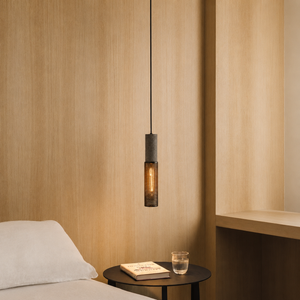
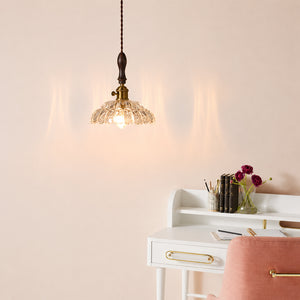
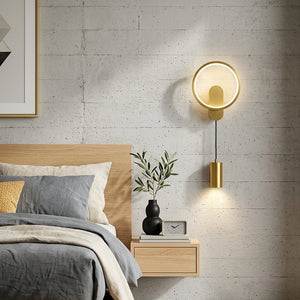
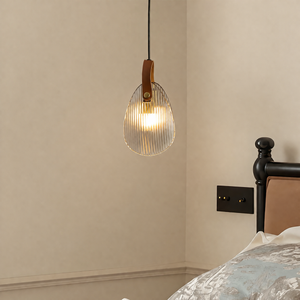
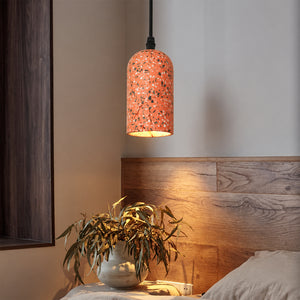
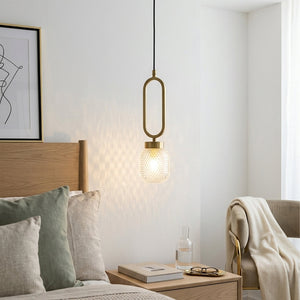
Pendant lights can be particularly useful in bedrooms — small pendants beside the bed can replace traditional bedside lamps, freeing up nightstand space and creating a more streamlined appearance on either side of the headboard. A small decorative chandelier can also work well in a larger bedroom where the ceiling height and proportions allow it, adding a touch of formality without needing a full-size dining-room fixture. For most bedrooms, though, the goal should be comfortable, relaxing illumination rather than excessive brightness, so warm light with dimming capability is worth prioritising over sheer visual drama.
- Bedside pendants free up nightstand space for books, water & a phone
- A small chandelier can suit a larger bedroom with adequate ceiling height
- Warm, dimmable light matters more here than maximum brightness
- Check hanging height carefully so the fixture doesn't sit at eye level


What Type of Lighting Is Best for a Small Home?
If space is limited, pendant lighting is usually easier to work with — a compact pendant adds style without crowding the ceiling, and multiple smaller pendants can be more adaptable than one large fixture as your furniture layout changes over time. That doesn't rule out a chandelier entirely: a compact, low-profile design can still add personality to a small dining area, bedroom, or entryway, provided its dimensions are checked against the room first. Scale matters more than the label — a small, well-proportioned chandelier can work better than an oversized pendant, and vice versa.
- Compact pendants keep a small ceiling from feeling crowded
- Multiple smaller pendants adapt more easily to layout changes
- A low-profile chandelier can still suit a small entryway or dining nook
- Always check actual dimensions against the room, not just the label "pendant" or "chandelier"
How to Choose the Right Size
One of the most common lighting mistakes is choosing a fixture that's too large or too small for the room. Instead of judging size from a showroom or online photo, consider the dimensions of the room and the furniture beneath the fixture.
- For pendants over tables and islands, a common approach is roughly one-half to two-thirds of the surface width as a starting point for diameter
- For chandeliers, weigh up room dimensions, ceiling height, table size, fixture diameter and height, sightlines, and clearance around furniture
- If unsure, mark the fixture's dimensions with painter's tape or cardboard before installing, to judge the scale in place
As a general starting point, pendant lights are often installed around 75–90 cm above a dining tabletop or 75–85 cm above a kitchen island — these are starting ranges, not universal rules, and should be adjusted for fixture size, user height, and ceiling height.
Style: Pendant Light vs Chandelier
Minimalist Homes
Simple geometric pendants, clean metal finishes, frosted glass, or understated linear fixtures work best.
Traditional Interiors
A classic chandelier can complement mouldings, wood furniture, and other decorative details.
Transitional Interiors
Either option works — look for a fixture that shares at least one visual trait (finish, shape, or material) with the room.
Cost, Installation & Combining Both
Price varies dramatically for both categories — a simple pendant can be inexpensive while a large designer pendant costs considerably more, and the same range applies to chandeliers. Don't evaluate cost by the purchase price alone:
- Bulb replacement and LED efficiency
- Cleaning and ongoing maintenance
- Ceiling support and electrical work needed for installation
- Dimmers and controls
- Long-term durability
Chandeliers can be heavier and more complex to install, particularly larger designs — if a fixture needs extra ceiling support or electrical modification, professional installation is the safer choice.
You don't have to choose only one, either. Combining pendant lights over the kitchen island, a chandelier over the dining table, and wall or floor lamps elsewhere is one of the most effective lighting schemes for an open-plan home. The fixtures don't need to match exactly — they just need to feel connected through finish, shape, or material.
Common Mistakes to Avoid
- Choosing based only on appearance — a fixture can look spectacular online and be completely wrong for your room's scale.
- Ignoring ceiling height — always consider the fixture's vertical dimensions, not just its width.
- Using too much light — more bulbs don't automatically mean better lighting; excessive brightness can feel harsh.
- Forgetting the furniture below — a light above a table or island should be sized in relation to that surface.
- Matching everything too closely — coordination is usually more sophisticated than an exact match.
- Skipping professional installation when needed — large or heavy fixtures may require ceiling support and electrical expertise.
Shop Chandeliers
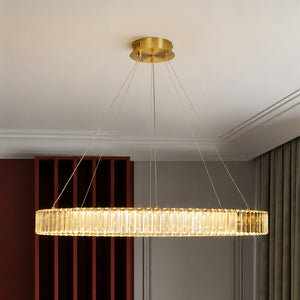
Statement chandeliers from Whispering Homes, from crystal to industrial finishes.

Alankrita Crystal Chandelier

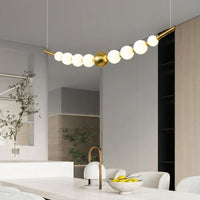
Orb Chain Linear Light

Marsa Round Chandelier

Aiwen Industrial Chandelier
Shop Pendant Lights
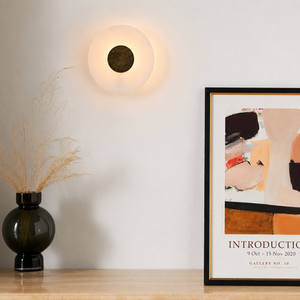
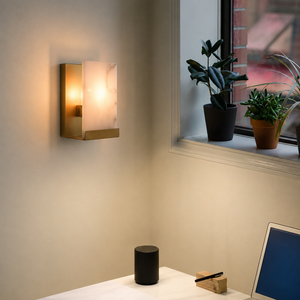
Pendant lighting from Whispering Homes, from brass and glass to wood and marble.

Holophane Pendant Lamp

Marble Pendant Light

Arte Illumina Pendant Light

Wood Tip Pendant Lamp
Frequently Asked Questions
Is a pendant light better than a chandelier?
Neither is universally better. Pendant lights are generally more flexible and focused, while chandeliers are stronger statement pieces for larger spaces.
Can pendant lights replace a chandelier?
Yes. One large pendant or several smaller pendants can replace a chandelier in many dining rooms and other spaces.
Which is better for a kitchen island?
Pendant lights are usually the practical choice because they provide focused illumination directly over the work surface.
Which is better for a dining room?
Both can work well. Choose a chandelier for a dramatic centrepiece, or pendants for a cleaner, more contemporary look.
Are chandeliers suitable for low ceilings?
They can be, provided the chandelier has appropriate proportions and sufficient clearance. Low-profile designs are usually easier to accommodate.
How high should a pendant light hang above a dining table?
A common starting range is about 75–90 cm above the tabletop, though the ideal height depends on the fixture and the room.
Can I use multiple pendant lights instead of one chandelier?
Yes. Multiple pendants can provide balanced lighting while creating a modern alternative to a traditional chandelier.
Are chandeliers only suitable for traditional homes?
No. Modern chandeliers come in minimalist, geometric, sculptural, linear, and contemporary designs, not just classic crystal styles.
Which is easier to maintain, a pendant or chandelier?
A simple pendant is generally easier to clean and maintain. More elaborate chandeliers may need additional cleaning because of their size and decorative components.
Should I choose a pendant or chandelier for my home?
Start with the room's size, ceiling height, furniture dimensions, lighting purpose, and interior style, and choose the fixture that best fits those practical requirements.
So, Which Is Better?
There's no universal winner in the pendant light vs chandelier debate. Choose a pendant when you want focused illumination, flexible placement, or a fixture that works comfortably in a smaller or lower-ceilinged space. Choose a chandelier when you want a strong focal point, have room for a substantial fixture, or want decorative and ambient lighting to play a major role.
For many homes, the best answer is genuinely both — pendants where focused lighting is useful, chandeliers where visual impact matters. The right fixture should fit the space, support how you actually use the room, and complement your home's design. Get those three things right, and the choice becomes much easier.