


























































































How to Size a Chandelier for Your Dining Table
Dining Room Chandelier Size Guide: Scale & Placement Rules
A practical guide to getting dining room chandelier size right, from table width to hanging height
The right dining room chandelier size is roughly one-half to two-thirds the width of your table, and clearly narrower than the tabletop itself. For a 60-inch table, that means a fixture around 30–40 inches wide, hung 30–36 inches above the tabletop on a standard 8-foot ceiling. Explore the full chandelier collection to compare proportions before you buy.

A dining room chandelier does more than provide light. It defines the room, anchors the table as a focal point, and sets the mood for everything from weeknight dinners to formal gatherings. But even a beautiful chandelier can look wrong when its proportions are off — too small and it disappears above the table; too large and the room starts to feel visually heavy.
Choosing the right dining room chandelier size doesn't have to be guesswork. Start with your table's dimensions, then layer in ceiling height, table shape, and the fixture's visual weight.
Why Chandelier Scale Matters
Functionally — a well-scaled chandelier keeps sightlines clear across the table and distributes light evenly over every seat, instead of leaving the ends of the table dim or the centre overlit.
Aesthetically — scale is what makes a chandelier feel connected to the table rather than competing with it. Getting it right is the difference between a fixture that anchors the room and one that's simply hanging there.
What Size Chandelier Should You Use Over a Dining Table?
For most dining tables, choose a chandelier that measures about one-half to two-thirds of the table's width — or keep it roughly 12 inches narrower than the table for about 6 inches of clearance on each side.
| Dining Table Width | Approximate Chandelier Width |
|---|---|
| 36 inches | 18–24 inches |
| 42 inches | 21–28 inches |
| 48 inches | 24–32 inches |
| 60 inches | 30–40 inches |
| 72 inches | 36–48 inches |
| 84 inches | 42–56 inches |
These figures are starting points. Open, airy fixtures can appear lighter than their measurements suggest, while dense crystal or multi-tier designs tend to feel larger. If you want bold visual interest, Sputnik chandeliers often read larger than their listed dimensions because of their radiating arms.
Should You Size a Chandelier to the Room or the Table?
When a chandelier hangs directly above a dining table, the table should usually be your primary reference point. A separate room-sizing formula exists — add the room's length and width in feet for an approximate fixture width in inches — but it can produce a different answer than the table-based calculation.
The chandelier and table form a visual pair. The light should relate to the surface beneath it, not simply match the walls around it. If your table is already chosen, prioritise it over the room formula.
Room formula = useful starting point.
Table formula = more important once the chandelier sits above a dining table.

Chandelier Size Calculator
Enter your table and ceiling measurements for an instant sizing recommendation.
Based on the half-to-two-thirds rule, kept roughly 12 in narrower than the table, with 3 in of extra hanging height per foot of ceiling above 8 ft. Adjust toward the lower end for visually dense fixtures, and toward the upper end for open, airy designs.
How High Should a Chandelier Hang Above a Dining Table?
For a standard 8-foot ceiling, the bottom of a dining chandelier is commonly positioned 30–36 inches above the tabletop — measured from the table surface, not the floor.
- 8-foot ceiling — 30–36 inches above the table
- 9-foot ceiling — approximately 33–39 inches
- 10-foot ceiling — approximately 36–42 inches
A common adjustment is roughly 3 inches of extra hanging height for every additional foot of ceiling above 8 feet. Before installation, check the fixture's total height, adjustable rod or chain length, canopy size, and lowest point — a chandelier can have the right width and still hang too low if its body is unusually tall.

How Do You Size a Chandelier for a Rectangular Table?
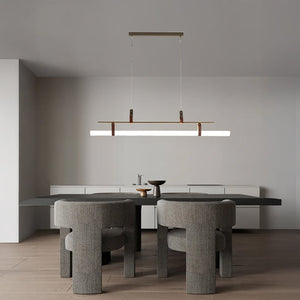
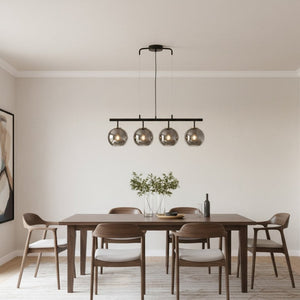
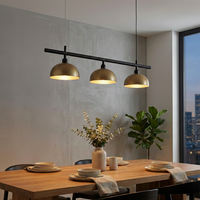
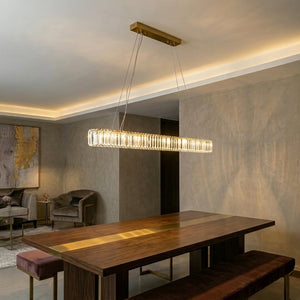
Rectangular tables generally work best with linear or elongated chandeliers, since the fixture echoes the table's long horizontal shape. Rather than diameter, measure the chandelier's length and width, and leave roughly 12 inches of table length clear at each end.
72-inch table
A linear chandelier around 48–60 inches long creates a strong visual relationship with the table.
84-inch table
A fixture around 56–72 inches long can work, depending on its visual weight and design.
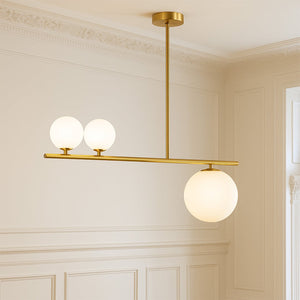
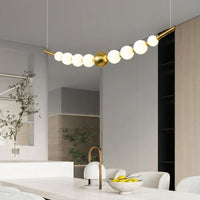
For very long tables, two or three smaller pendants can create rhythm and distribute light more evenly than a single large fixture. Browse linear chandeliers for elongated designs built for this exact proportion.

What Chandelier Shape Works Best With Your Table?
Table shape is another core part of chandelier scale. Look for visual harmony, not necessarily an exact geometric match.
Round table
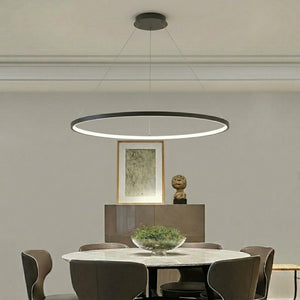
A round chandelier usually creates the most natural relationship, reinforcing the table's geometry with a centred focal point.
Square table
Round, square, or compact geometric fixtures work well — match the scale to the table's width, not the size of the room.
Rectangular table
Linear fixtures or multiple pendants follow the length of the table and keep it evenly lit end to end.
Oval table
A linear fixture can emphasise its length, while a rounded chandelier softens the overall composition.

Mid-century warmth
A rounded, sculptural silhouette that sits comfortably over round and square tables alike.

Compact spaces
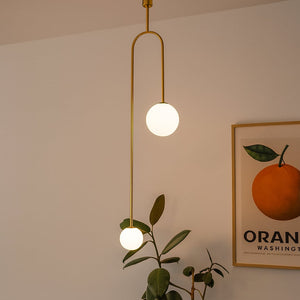
Proof that a smaller footprint can still feel intentional over a four-seater table.
Dimensions tell you how large a chandelier is. Visual weight tells you how large it feels.
Does the Chandelier's Visual Weight Change the Size You Should Choose?
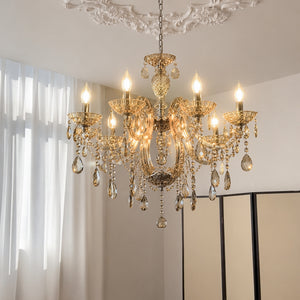
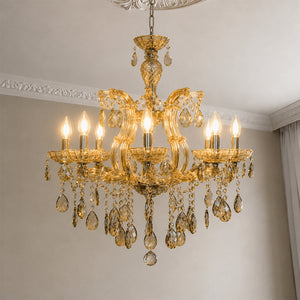
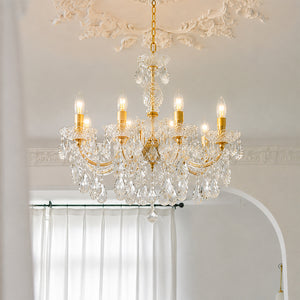
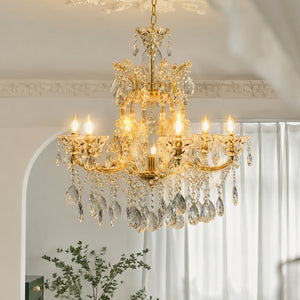
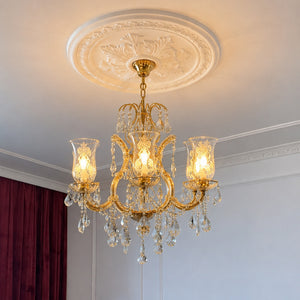
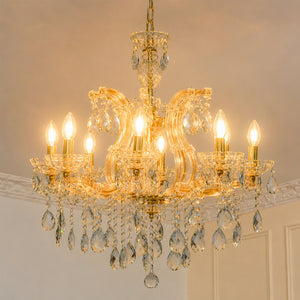
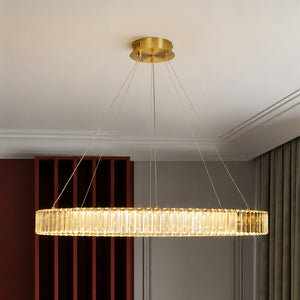
Two chandeliers with identical dimensions can look completely different in a room. A fixture with thin arms, exposed bulbs, or an open cage structure reads as visually light, while a solid metal or dense crystal design feels significantly heavier at the same width.
If your chandelier is visually dense, lean toward the lower end of your sizing range. If it's open and airy, you can move toward the upper end — a 36-inch open-frame design can look surprisingly delicate over a 60-inch table, while a 36-inch solid drum-style fixture feels far more substantial.

What Size Chandelier Is Best for a 4-, 6-, or 8-Seater Table?
Seat count can help narrow your shopping, but table dimensions remain more reliable — two six-seater tables can have very different measurements.
- Four-seater (36–48 in wide) — chandelier approximately 18–32 inches wide
- Six-seater (60–72 in wide) — chandelier approximately 30–48 inches wide
- Eight-seater (72–96 in wide) — a substantial linear fixture or a coordinated group of pendants
Always measure the table first, then shop by dimension rather than seat count alone.

How Do You Account for High or Low Ceilings?
High ceilings can support a longer chandelier body, a larger sculptural fixture, or a longer adjustable stem — increasing the tabletop-to-fixture distance by roughly 3 inches per additional foot above 8 feet keeps the proportion connected rather than floating.
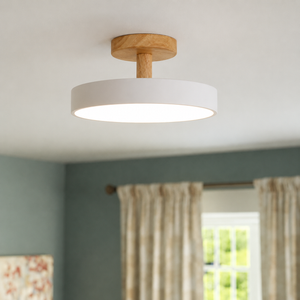
Low ceilings need more care. A long fixture body can make a room feel compressed even at the correct width, so favour a shallow profile or semi-flush design that creates horizontal presence without vertical bulk.
Where Should the Chandelier Be Positioned?
Centre it over the dining table — not necessarily the geometric centre of the room. This matters most when the table sits off-centre due to a sideboard, doorway, or open-plan layout. If the ceiling junction box isn't centred over the table, an electrician can reposition it; always use a qualified professional for electrical work.
Should the Chandelier Match the Table Style?
Not necessarily. A modern table can work with a sculptural traditional chandelier, and a rustic wood table can look sophisticated beneath a refined metal fixture. Think of the chandelier as the jewellery of the room — it should complement the space without disappearing into it.
How Do You Avoid the Most Common Sizing Mistakes?
Choosing a fixture that's too small
A chandelier can look substantial in a showroom and surprisingly small once installed above the table.
Ignoring table width
A large room doesn't change the fact that the chandelier still needs to relate to the table beneath it.
Hanging it too high or too low
Too high and it loses connection to the meal; too low and it crowds sightlines across the table.
Forgetting the fixture's true dimensions
Check total height, canopy size, adjustable rod length, and the lowest hanging point — not just width.
Ignoring visual weight
A 30-inch open fixture and a 30-inch solid fixture will not have the same impact in the room.
Centring it in the room instead of the table
The table is the anchor — the chandelier should generally follow its position, not the room's.
A Simple Chandelier Sizing Formula You Can Use Today
Table width × 0.5 to 0.67 = approximate chandelier diameter. For a 60-inch table: 60 × 0.5 = 30 inches, and 60 × 0.67 ≈ 40 inches — so a chandelier around 30–40 inches wide is a reasonable starting range.
Check clearance
Is it at least roughly 12 inches narrower than the table on each side?
Check hanging height
Can it be hung 30–36 inches above the tabletop for your ceiling height?
Chandeliers Worth Building Your Dining Room Around
A range of proportions and visual weights to match your table.

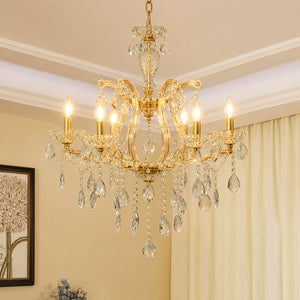
Regalis Grandeur Crystal Chandelier
A dense, statement crystal silhouette suited to larger tables and higher ceilings.
₹ 32,199
Kayla 8-Light Classic Chandelier
An open, blackened silhouette that reads lighter than its width over mid-size tables.
₹ 16,899
Aalto Starburst 8-Light Chandelier
A radiating Sputnik-style form that reads larger than its measurements suggest.
₹ 19,099
Marsa 6-Light Round Chandelier
A compact, round profile built for four- and six-seater round or square tables.
₹ 12,799Frequently Asked Questions
What size chandelier should I use over a dining table?
A good starting point is a chandelier about one-half to two-thirds the width of the dining table. Compare suitable options across the chandelier collection before deciding.
How high should a chandelier hang above a dining table?
For a standard 8-foot ceiling, position the bottom of the fixture approximately 30–36 inches above the tabletop, measured from the table surface, not the floor.
Should a chandelier be wider than a dining table?
Generally, no. Keeping the chandelier narrower than the table helps maintain visual balance. A common guideline is roughly 12 inches narrower overall.
What size chandelier is best for a 60-inch dining table?
A chandelier approximately 30–40 inches wide is a useful starting range for a 60-inch table, based on the half-to-two-thirds rule.
What chandelier shape works with a rectangular table?
Linear or elongated chandeliers usually complement rectangular tables because their shape echoes the table's proportions and distributes light evenly along its length.
Can I use a round chandelier over a rectangular table?
Yes. A round chandelier can create an attractive contrast, particularly when its scale is carefully matched to the table's width.
Does ceiling height affect chandelier size?
Yes. Taller ceilings can accommodate greater vertical presence and a longer drop, while low ceilings usually benefit from a shorter or shallower profile.
Should the chandelier be centred in the dining room?
Not necessarily. It should generally be centred over the dining table, even when the table sits off-centre in the room.
Is the room-size formula better than the table-size formula?
When the chandelier is directly above a dining table, the table-based calculation is usually the more useful starting point. The room formula works as a secondary check.
What is the biggest chandelier-sizing mistake?
Choosing a fixture without considering the table's dimensions, ceiling height, and the chandelier's visual weight.
Final Thoughts: Get the Proportion Right, Then Make It Personal
The perfect dining room chandelier isn't the biggest or most decorative fixture you can fit into the room. It's the one that feels naturally connected to the table and the architecture around it. Start with the table, use roughly half to two-thirds of its width as your sizing range, and adjust for ceiling height, visual weight, and shape from there.
Once those fundamentals are right, you have far more freedom to make a statement. A chandelier shouldn't compete with your dining table — it should make the table feel like the place everyone wants to gather.