











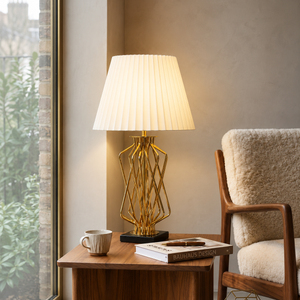
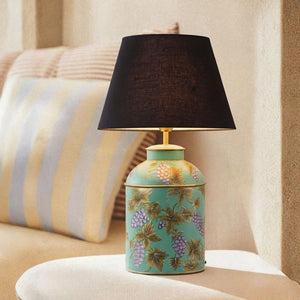


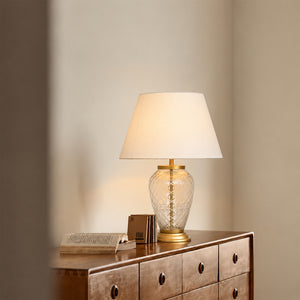
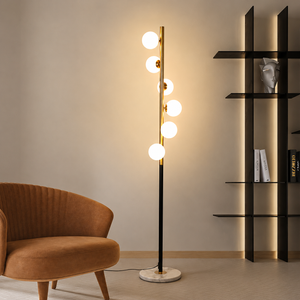
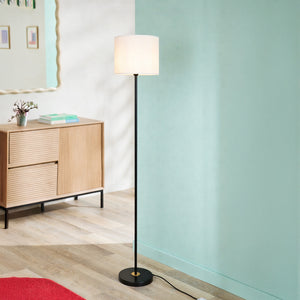
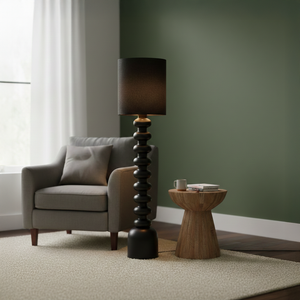
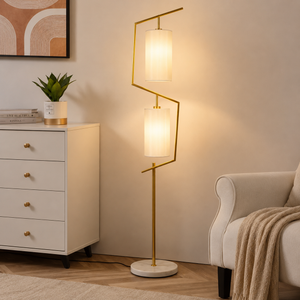
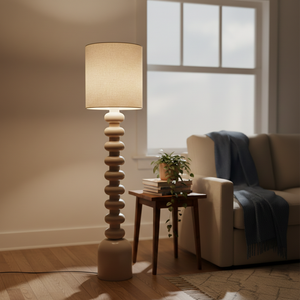
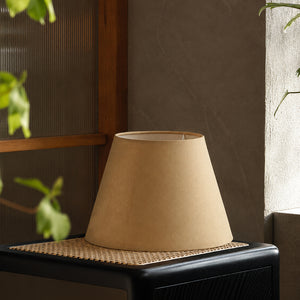
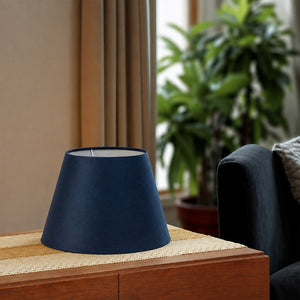
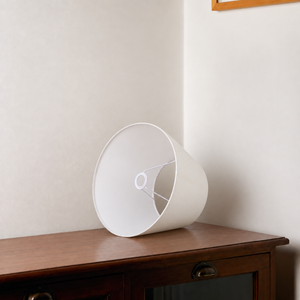
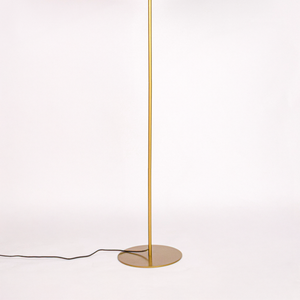











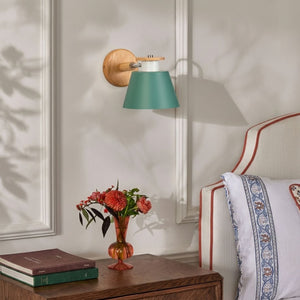
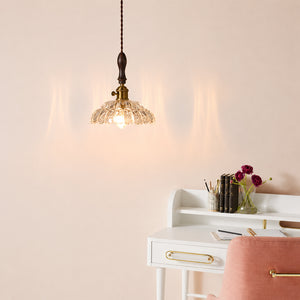



















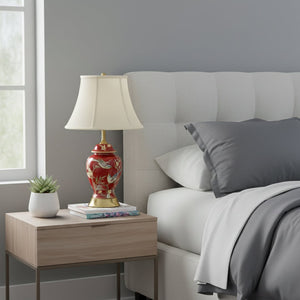
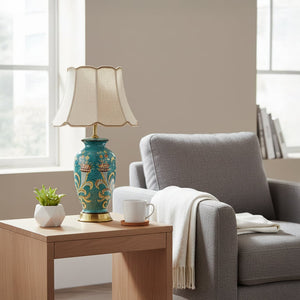
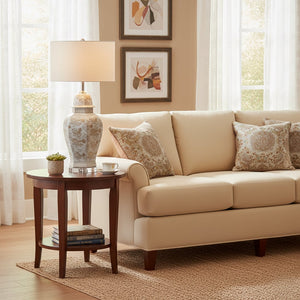
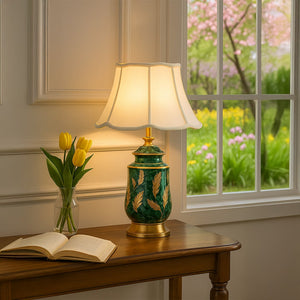



How to Choose the Right Lampshade for Table or Floor Lamps
Whispering Homes JournalLighting Guide
How to Choose the Right Lampshade for Table or Floor Lamps
The right shade does more than soften a bulb. It sets the mood, balances the lamp and finishes the room.
To choose the right lampshade, match the shape to the lamp base, keep a table lamp shade about 65–80% of the base height and roughly twice its width, and pick a material that gives the light you want, such as fabric for a soft glow or velvet for drama. Confirm the fitter (spider, UNO or clip-on) before buying, and make sure the bulb and socket are hidden. Browse our lampshades to compare styles.

What Does a Lampshade Actually Do?
A lampshade is the cover that surrounds a lamp’s bulb to soften, direct and decorate the light it gives off. Lampshades are often overlooked, yet they hold the power to transform an entire room. The right lampshade does more than diffuse light: it adds character, enhances decor and balances proportion, whether it sits on a cozy corner lamp or a modern floor fixture.
With so many shapes, sizes, fabrics and fittings available, it is easy to feel overwhelmed. This guide from Whispering Homes walks you through how to choose the right lampshade for table or floor lamps, so you can find what fits your style and lights up your space beautifully. You can also browse our lampshade collection as you read.
What roles does a lampshade play?
- Diffuse and direct light: a shade softens harsh bulbs to create a warm and cozy atmosphere.
- Act as a design piece: shades complement furniture and wall art to bring balance and elegance to your space.
- Set the mood: by controlling how much light is emitted and in what direction, a shade takes a room from calm and relaxing to bright and energizing.
- Reduce glare: the shade keeps the bulb and socket out of direct view, which is easier on the eyes.
Expert tip
Consider both form and function when selecting your lampshade. It should enhance your decor while providing the right light quality for your needs.

How Do Table and Floor Lamp Shades Differ?
The kind of lamp you have influences the size and shape of the shade you should choose. Table and floor lamps sit in different places and have very different proportions, so their shades follow different rules.
Table lamps
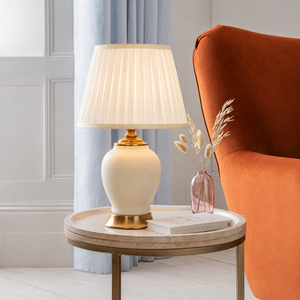
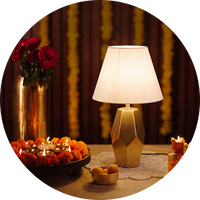
These are usually placed on nightstands, desks or side tables. They typically need medium-sized shades that balance proportionately with the base. Explore table lamps to see bases in different scales.
Floor lamps
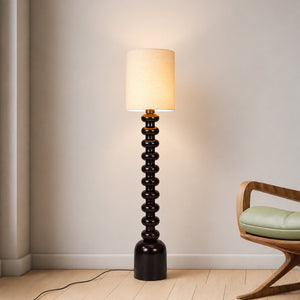
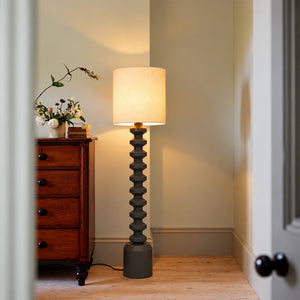
Because of their height and scale, floor lamps often require larger shades to maintain visual harmony. See our floor lamps for tall, statement bases.
Mind the scale
Always consider the scale of the lamp and its surrounding furniture when choosing a lampshade. An oversized or undersized shade can throw off the entire look.

| Feature | Table lamp shade | Floor lamp shade |
|---|---|---|
| Typical placement | Nightstands, desks and side tables | Beside sofas and armchairs, and in reading corners |
| Shade size | Medium, in proportion to the base | Larger, to balance the tall base |
| Height rule | About 65–80% of the base height | About one-third of the total lamp height |
| Width rule | About twice the base width | Wide enough to balance the base without overwhelming it |
| Common fitter | Spider or clip-on | Spider or UNO |
“The right lampshade does more than diffuse light. It adds character, enhances decor and balances proportion.”Whispering Homes Journal
Which Lampshade Material Is Best?
The best lampshade material depends on the light you want: fabric gives a soft, even glow, suede gives a cozy, slightly dimmer light, and velvet gives a dramatic, directional look. Each material changes how much light passes through the shade, so choose by mood as much as by looks.
Fabric lampshades
Fabric is one of the most popular and versatile materials for lampshades. Cotton, linen and silk are widely used to create a soft, diffused glow. They are ideal for bedrooms, living rooms or any place where you want cozy, ambient lighting.
- Wide range of styles and colors
- Works well with most decors
- Filters light evenly
Best for: Bedrooms, lounges and soft-lit reading corners.

Suede lampshades
Suede is a luxurious and stylish option. With its soft texture and muted finish, suede lampshades add a touch of elegance and warmth.
- Rich, tactile texture
- Offers a slightly dimmer, cozy ambiance
- Great for premium decor themes
Best for: Libraries, offices or vintage-themed rooms.

Velvet lampshades
Velvet brings opulence to a room. Its dense fabric structure allows it to block more light, directing it only through the top and bottom openings.
- Luxurious feel and appearance
- Adds depth and drama to the room
- Excellent for spotlighting and mood lighting
Best for: Dining rooms, boudoirs and glamorous interiors.

| Material | Light effect | Look and feel | Best rooms |
|---|---|---|---|
| Fabric | Filters light evenly for a soft, diffused glow | Cotton, linen or silk in many styles and colors | Bedrooms, lounges, reading corners |
| Suede | Slightly dimmer, cozy ambiance | Soft texture with a muted finish | Libraries, offices, vintage rooms |
| Velvet | Blocks more light and directs it through the top and bottom | Dense, opulent and dramatic | Dining rooms, boudoirs, glamorous interiors |
How Do You Match a Lampshade Shape to the Lamp Base?
The shape of your lampshade should complement, not clash with, your lamp base. As a rule, echo the base: round bases suit round or empire shades, while square or angular bases suit rectangular or square shades.
| Shape | Description | Pairs well with | Ideal for |
|---|---|---|---|
| Empire shade | Narrow top, wide bottom | Traditional lamp bases | Classic and vintage interiors |
| Drum shade | Equal width at top and bottom | Modern and minimalistic bases | Contemporary or Scandinavian decor |
| Bell shade | A flared shape with a curve | Ornate and decorative lamp bases | Elegant, feminine spaces |
| Rectangle or square shade | Clean lines, sharp corners | Angular or modern lamp bases | Urban or industrial interiors |
How do you pair a shade with a base?
- Round base: go with a round or empire shade.
- Square or angular base: a rectangular or square shade enhances its symmetry.
- Ornate base: a bell shade adds to the decorative feel.
- Modern or minimalist base: a drum shade keeps the lines clean.
Cool tip
If your lamp base is round, go with a round or empire shade. If it is square or angular, a rectangular or square shade will enhance its symmetry.

Should You Choose a Task, Accent or Ambient Lampshade?
Every lampshade serves a specific purpose depending on the lamp’s location and its lighting role. Deciding whether the lamp is for working, highlighting or general glow narrows down the material, color and shape quickly.
Task lighting
Ideal for reading or working. Choose light-colored, translucent materials like linen or cotton that allow more light through.
Accent lighting
Meant to highlight art or decor. Opt for directional shades like cone or empire shapes in opaque materials.
Ambient lighting
For general room illumination. Drum or cylinder shades in neutral tones work well for a balanced light distribution.
Quick matches
- Reading chair: a light linen or cotton shade.
- Art or shelf corner: an opaque cone or empire shade.
- Living room glow: a neutral drum shade.

How Do You Find the Right Lampshade Size?
Lampshade size is the height and width of the shade relative to the lamp it sits on, and it matters as much as style. A shade that is too big or too small can throw off the entire look of the lamp and the room.
For table lamps
Two simple ratios keep a table lamp balanced.
- Height of the shade: should be about 65–80% of the lamp base’s height.
- Width of the shade: should be twice the width of the lamp base.
For floor lamps
Tall lamps need shades that anchor the whole fixture.
- Height of the shade: typically around one-third the height of the lamp.
- Width of the shade: should be wide enough to balance the tall base but not so large it overwhelms.
What do those ratios look like in real sizes?
Use these worked examples as a starting point, then adjust to what looks right in the room.
| Lamp | Measurement | Suggested shade |
|---|---|---|
| Table lamp | Base 12 in (30 cm) tall and 6 in (15 cm) wide | About 8–10 in (20–24 cm) tall and 12 in (30 cm) wide |
| Table lamp | Base 18 in (46 cm) tall and 7 in (18 cm) wide | About 12–14 in (30–37 cm) tall and 14 in (36 cm) wide |
| Floor lamp | 60 in (152 cm) tall overall | About 20 in (51 cm) tall |
| Floor lamp | 66 in (168 cm) tall overall | About 22 in (56 cm) tall |
How do you check the size in four steps?
-
Measure the base
Note the height and width of a table lamp base, or the total height of a floor lamp.
-
Apply the ratios
Use 65–80% of base height and twice the base width for table lamps, or one-third of total height for floor lamps.
-
Check the bulb and socket
Make sure the bulb and socket are hidden under the shade when you are standing or sitting nearby.
-
Step back and look
View the lamp from across the room. If it looks top-heavy or dwarfed, move up or down a size.
Extra tip
Always make sure the bulb and socket are hidden under the shade when you are standing or sitting nearby.
What Are Lampshade Fitters and How Do They Attach?
A lampshade fitter is the mechanism that connects the shade to the lamp. You cannot pick just any shade and expect it to fit perfectly, because there are different types of fitters.
Spider fitter
Most common. Sits on top of a harp and is secured with a finial.
UNO fitter
Attaches directly to the socket and is often used in floor lamps.
Clip-on fitter
Clips directly onto the light bulb and is typically used for smaller table lamps.
Choosing the wrong fitter can make installation difficult or result in a shaky lampshade.

| Fitter | How it attaches | Typically used on |
|---|---|---|
| Spider fitter | Sits on top of a harp and is secured with a finial | Most common style of lamp |
| UNO fitter | Attaches directly to the socket | Often floor lamps |
| Clip-on fitter | Clips directly onto the light bulb | Smaller table lamps |
What should you check before you buy?
- Look at the top of your lamp: is there a harp, a bare socket, or just a bulb?
- Note the fitter type your lamp needs before choosing a shade.
- Measure the base as well, so the shade size and the fitter both work together.
How Do Colors and Patterns Change a Lampshade?
Lampshades offer an easy way to inject color or pattern into your space. The shade color also changes the glow itself, so it is worth testing with the bulb switched on.
Neutral shades
White, cream and beige allow more light through and create a soft glow.
Dark shades
Black, navy and forest green focus the light directionally and create mood.
Patterns
Floral, geometric and abstract patterns act as accent pieces. Use them to match cushions or artwork.
- Want contrast? Use a bold shade against a neutral base and wall.
- Want to blend in? Choose a neutral shade that echoes the wall or upholstery.
- Want a focal point? Let a patterned shade repeat a color from nearby cushions or art.
Pro tip
Use a bold shade to add contrast or a neutral one to blend seamlessly with your decor.
Which Lampshade Works Best in Each Room?
The best lampshade for a room is the one that suits what the room is used for. A bedroom wants calm and soft, while a dining room can carry more drama.
- Bedroom: a fabric shade in a neutral or soft color for a cozy, restful glow.
- Living room: a neutral drum or empire shade for balanced, ambient light.
- Reading corner or home office: a light linen or cotton shade that lets more light through.
- Library or study: a suede shade for a warm, slightly dimmer, vintage feel.
- Dining room or boudoir: a velvet shade for depth and drama.
- Modern or urban space: a rectangular or square shade to echo clean lines.
Which Bulb Should You Use Under a Lampshade?
The best bulb for a lampshade is a warm-white LED that stays within the maximum wattage marked on the lamp and is hidden from view by the shade. The bulb decides how the shade behaves, so it is worth choosing it as carefully as the shade.
- LEDs save energy: the U.S. Department of Energy notes that residential LEDs, especially ENERGY STAR rated products, use at least 75% less energy and last up to 25 times longer than incandescent lighting.
- LEDs run cooler: they emit very little heat, which is kinder to fabric, suede and velvet shades, while incandescent bulbs release about 90% of their energy as heat.
- Lighting adds up: lighting accounts for about 15% of an average home’s electricity use, according to the DOE guide to energy-efficient lighting, so efficient bulbs matter across every lamp.
- Warm white feels cozy: a warm-white bulb (around 2700K–3000K) matches the soft glow most people want from a shade.
- Respect the wattage limit: never exceed the maximum wattage marked on the lamp.
- Use dimmable bulbs with dimmers: this lets you tune the glow for reading or relaxing.
What Are the Most Common Lampshade Mistakes?
The most common lampshade mistakes are wrong size, wrong shape, wrong fitter and a visible bulb. Each one is easy to avoid once you know what to look for.
Choosing the wrong size
An oversized or undersized shade throws off the look of both the lamp and the room.
FixUse 65–80% of base height for table lamps and about one-third of total height for floor lamps.
Ignoring the base shape
A shade that clashes with the base makes the whole lamp look accidental.
FixEcho the base: round with round or empire, angular with rectangular or square.
Buying the wrong fitter
The wrong fitter makes installation difficult and leaves the shade wobbly.
FixCheck whether your lamp needs a spider, UNO or clip-on fitter first.
Leaving the bulb visible
A visible bulb or socket creates glare and looks unfinished.
FixPick a shade that hides the bulb and socket from standing and seated eye level.
Using a dark shade for reading
Dark or dense materials such as velvet block light and make reading tiring.
FixChoose a light-colored, translucent linen or cotton shade for task lamps.
Forgetting the lamp’s job
A shade chosen only for looks may not deliver task, accent or ambient light.
FixDecide the lighting role first, then pick material, color and shape.
How Do You Clean and Care for Lampshades?
Caring for a lampshade means keeping it dust-free and protecting its material from heat, moisture and sunlight. A few simple habits keep shades looking fresh for years.
- Switch off and cool down: turn the lamp off and let the bulb cool before cleaning.
- Dust regularly: use a soft brush, lint roller or microfiber cloth to lift dust from fabric and pleats.
- Vacuum gently: a brush attachment on low suction works for pleated and fabric shades.
- Go easy on moisture: spot-clean with a barely damp cloth and avoid soaking velvet or suede, and check the maker’s care advice first.
- Avoid direct sun: strong sunlight can fade colors over time.
- Choose cooler bulbs: LED bulbs put less heat on the shade than incandescent bulbs.
Lampshades to Shop
Handpicked shades for table and floor lamps.


Rome Lamp Shade - Black
A black shade that focuses light for a moody, modern look.
₹2,999.00
Add to Cart
Verdant Tapered Pleated Lamp Shade - Off White
A tapered, pleated off-white shade for soft, diffused light.
₹2,499.00
Add to CartFrequently Asked Questions About Choosing Lampshades
Straight answers to the questions we hear most about lampshades.
What size lampshade should I choose for a table lamp?
For a table lamp, the shade height should be about 65–80% of the lamp base’s height, and the shade width should be roughly twice the width of the base. For example, a base that is 12 inches tall and 6 inches wide suits a shade about 8–10 inches tall and 12 inches wide.
What size lampshade should I choose for a floor lamp?
For a floor lamp, the shade height is typically around one-third of the lamp’s total height. The width should be wide enough to balance the tall base without overwhelming it, so floor lamps usually need larger shades than table lamps.
Which lampshade shape goes with my lamp base?
Match the shade to the shape of the base: round bases pair well with round or empire shades, while square or angular bases suit rectangular or square shades. Drum shades work with modern and minimalist bases, and bell shades suit ornate, decorative bases.
Which lampshade material gives the softest light?
Fabric lampshades in cotton, linen or silk give the softest, most evenly diffused glow, which makes them ideal for bedrooms, living rooms and reading corners. Suede gives a slightly dimmer, cozy light, while velvet blocks the most light.
Is a velvet lampshade good for reading?
Velvet is better for mood than for reading. Its dense fabric blocks more light and directs it mainly through the top and bottom openings, so for reading or work choose a light-colored, translucent material such as linen or cotton.
What is a lampshade fitter and how do I know which one I need?
A fitter is the mechanism that attaches the shade to the lamp. A spider fitter sits on top of a harp and is secured with a finial, an UNO fitter attaches directly to the socket and is often used on floor lamps, and a clip-on fitter clips onto the bulb for smaller table lamps. Check how the top of your lamp is built before you buy.
Should the bulb be visible through the lampshade?
No. The bulb and socket should be hidden under the shade when you are standing or sitting nearby. If you can see the bulb from normal eye level, the shade is too small or too high for the lamp.
Which color lampshade is best?
Neutral shades in white, cream or beige let more light through and create a soft glow. Dark shades in black, navy or forest green focus the light directionally and create mood, while patterned shades work as accent pieces that can match cushions or artwork.
What bulb should I use under a lampshade?
Use a warm-white LED bulb that stays within the maximum wattage marked on your lamp. According to the U.S. Department of Energy, residential LEDs, especially ENERGY STAR rated products, use at least 75% less energy than incandescent lighting and give off very little heat, which is kinder to fabric shades.
Which lampshade is best for a bedroom or living room?
Fabric shades in cotton, linen or silk are the most popular choice for bedrooms and living rooms because they create a soft, cozy glow. Suede suits libraries, offices and vintage-themed rooms, while velvet suits dining rooms and glamorous interiors.
Final Thoughts: Light Up Your Space With Style
Choosing the perfect lampshade isn’t just about aesthetics. It’s about understanding how form, function and atmosphere intersect. From selecting the right material, like fabric, suede or velvet, to sizing it appropriately and matching it with your decor, every step contributes to a space that feels intentional and beautifully lit.
At Whispering Homes, we believe lighting should reflect your personality and elevate your home’s design. Whether you’re refreshing a room or doing a full makeover, the right lampshade can be the statement piece that ties it all together. Ready to shop? Explore our exclusive collection of handpicked lampshades for table and floor lamps, crafted to bring elegance, warmth and modern flair to every corner of your home.
The right shade changes everything.
Explore lampshades for table and floor lamps.
Explore Lampshades